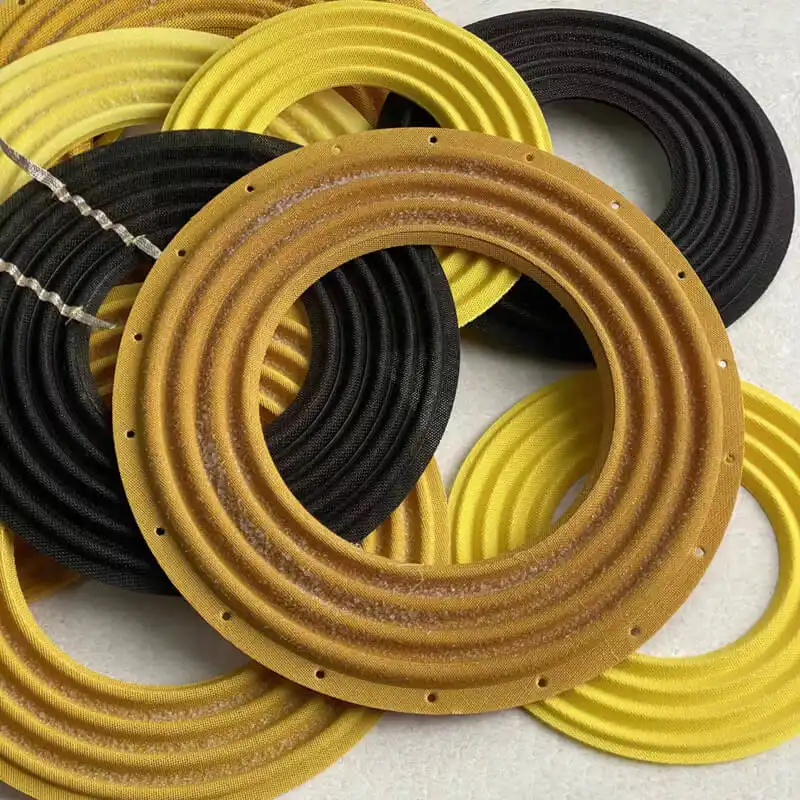
How ERP Process Control Improves Speaker Spider Batch Production and Export Order Accuracy
ERP process control helps speaker spider factories connect RFQ data, samples, tooling, inspection, and packing records to reduce batch and export order mistakes.
International buyers of speaker spiders and dampers rarely struggle with product names alone. The real challenge is order accuracy across repeated builds, sample revisions, mixed-language communication, and batch production under tight timelines. A speaker spider may look simple on paper, but small changes in dimensions, material, corrugation, or voice-coil matching can create large performance differences once production starts.
That is why ERP process control matters in speaker spider manufacturing. When a factory links RFQ details, approved samples, tooling records, material batches, production orders, inspection results, and packing labels in one controlled workflow, the risk of mismatch drops sharply. For OEM teams, component sourcing buyers, woofer and subwoofer builders, and repair replacement channels, that means better traceability and fewer surprises between sample approval and shipment.
Why batch accuracy is difficult in speaker spider production
Speaker spider production is a specification-driven process. A buyer may request a part by an old sample, a drawing, a voice-coil size, or even a legacy internal code. If that information is handled manually across email threads, paper notes, spreadsheets, and workshop memory, errors can enter at several points.
Common risk areas include:
- OD, ID, and SOD confusion between old and revised drawings
- FH and EH changes not reflected in the production order
- wrong material code or fabric type selected during cutting or forming
- corrugation profile mismatch when similar molds are stored together
- voice-coil group mismatch affecting centering and compliance
- sample-approved specification not transferred correctly to batch order
- mixed packing labels for similar export items
- repeat orders produced from memory rather than the latest approved version
These issues matter because the spider is a centering component, not a cosmetic one. If dimensions or compliance shift outside the intended range, the speaker's moving system can lose alignment, feel inconsistent in assembly, or fail to meet expected performance.
What ERP process control means in a speaker spider factory
In practical terms, ERP process control is the use of a central factory management system to connect every order stage instead of treating quotation, sampling, production, inspection, and shipping as separate islands.
For speaker spider and damper manufacturing, the ERP record should connect:
- customer RFQ information
- drawing version or sample reference
- specification confirmation
- mold or tooling identification
- material code and batch record
- sample status and approval result
- production order release
- in-process and final inspection data
- packing and carton label information
- shipment record and repeat-order history
This matters especially for multilingual international business. A buyer may describe a part using internal product terminology, while the factory uses a technical naming structure built around dimensions and process details. ERP control helps standardize that translation into a manufacturing-ready item record.
Key data points that should be locked before mass production
Before a batch production order is released, several checkpoints should be clear and traceable:
- OD: outer diameter
- ID: inner diameter
- SOD: step or seating-related outer dimension where applicable
- FH: front height or forming height specification
- EH: effective or overall height used for assembly fit confirmation
- voice-coil group: matching size and structure for assembly compatibility
- material code: resin, cloth, blend, or treated material reference
- corrugation: wave profile, quantity, spacing, and form
- compliance target: stiffness or flexibility expectation for the design
- centering requirement: how the part supports voice-coil alignment
- sample approval status: whether production follows drawing, signed sample, or revised sample
Without a controlled system, one or more of these details can remain informal. ERP reduces that dependence on memory and scattered communication.
How ERP improves RFQ preparation and specification confirmation
Many production mistakes begin before production. They start in RFQ preparation.
A strong RFQ for speaker spiders should do more than ask for price. It should establish the exact part identity and prevent assumptions. When the ERP workflow begins at the RFQ stage, the factory can create a structured record instead of relying on free-text messages.
Better RFQ structure leads to better manufacturing control
For buyers, a clear RFQ should include as many of these details as possible:
- application type: woofer, subwoofer, midrange, replacement, or repair use
- target dimensions: OD, ID, SOD, FH, EH
- voice-coil size and assembly relationship
- material preference or existing material sample
- corrugation profile requirement
- compliance expectation
- quantity by version
- whether tooling exists, needs matching, or needs new mold support
- approval method: drawing only, sample matching, or pre-production sample sign-off
- labeling, carton marking, and export packing requirements
When entered into ERP, this information forms the basis of the internal item code and process route. That helps the factory distinguish between similar-looking parts that are actually different in fit or performance.
Sample matching becomes more reliable
Sample matching is common in speaker component sourcing, especially for aftermarket parts, replacement projects, and legacy models where the original drawing is incomplete. ERP control improves this step by linking:
- the incoming sample reference
- dimensional measurement records
- material identification notes
- tooling selection or mold development status
- trial sample output
- customer approval result
This is especially useful when a project includes minor revisions after sample review. If the approved version changes from the first trial, the ERP record can lock the final accepted parameters before batch release. That reduces the chance that workshop staff produce an earlier version by mistake.
How ERP reduces batch production errors on the factory floor
Once production starts, order accuracy depends on execution discipline. ERP cannot replace technical skill, but it can make the process more visible and repeatable.
Material batch control
A spider's performance depends heavily on material consistency. If a production order calls for a specific material code and treatment, the material issue record should match that exact requirement. ERP helps by linking the production order to the approved material code and batch usage record.
For buyers, this supports two practical goals:
- consistency between approved samples and later mass production
- easier investigation if a future batch shows a variation in feel, compliance, or assembly behavior
Tooling and corrugation control
Many speaker spiders differ by subtle geometry rather than obvious appearance. Similar molds can produce different corrugation behavior, height, or seating fit. ERP-linked tooling records make it easier to confirm that the correct mold or forming setup is assigned to each order.
This is particularly important when a factory handles:
- multiple variants for one customer platform
- low-volume mixed orders
- repeat orders separated by long time intervals
- replacement parts that resemble standard production items
Production order version control
Version confusion is a frequent source of avoidable errors. An ERP system can tie the manufacturing order to the latest approved drawing or sample revision, preventing old instructions from re-entering the line.
For sourcing teams, this matters when:
- the first sample was adjusted after trial fit
- packaging text was revised for export compliance
- the voice-coil matching requirement changed during project development
- one customer code covers more than one historical version
Process traceability across departments
Speaker spider production typically moves through several internal steps such as material preparation, forming, curing or shaping processes, inspection, and packing. ERP creates a common record so that sales, engineering, production, quality, and warehouse teams are working from the same order identity.
That cross-department visibility is valuable for multilingual projects because it reduces the chance that one team reads a customer request differently from another.
Why inspection records and packing labels matter for export accuracy
Export order accuracy is not only about making the right spider. It also includes proving that the right version was made, inspected, packed, and labeled.
Inspection records support quality decisions
For speaker spiders, inspection should reflect the practical checkpoints that matter to assembly and performance. Depending on the item, these may include:
- OD and ID verification
- SOD confirmation where fit requires it
- FH and EH measurement
- corrugation consistency
- appearance check
- centering-related dimensional stability
- material confirmation against code
- sample-to-batch comparison where required
When these records are linked in ERP to the order number and material lot, buyers gain stronger traceability. If there is a complaint, a quality question, or an engineering review, the factory can check what was produced rather than relying on memory.
Packing and label control reduce shipment mistakes
For international buyers, a correct product packed under the wrong label is still a costly problem. ERP-supported packing control helps connect the finished goods record with:
- item code
- customer part number
- batch number
- carton quantity
- label content
- shipment destination or order allocation
This is especially important in mixed export shipments where multiple spider sizes or variants are packed together. A disciplined label workflow reduces mis-picks, carton swaps, and repeat-order confusion in the buyer's warehouse.
Why ERP matters even more for repeat orders and long-term sourcing
Many speaker component programs are not one-time buys. They continue through repeat purchases, engineering updates, and model maintenance. In that environment, the real value of ERP is cumulative.
Repeat orders should not depend on memory
A repeat order often looks simple: same part, same dimensions, same packing. But in practice, repeat orders can fail when:
- an old sample version is pulled from storage
- a newer material code is substituted informally
- a former label format is reused by mistake
- internal staff changes break continuity
- similar customer projects get mixed together
ERP reduces these risks by preserving the approved technical and commercial history of the item. For buyers, that means less need to restart technical discussions every time a reorder is placed.
Better communication for multilingual projects
Cross-border sourcing often involves multiple languages, unit conventions, and naming habits. One team may speak in part numbers, another in dimensions, and another in sample photos. ERP helps standardize these into one controlled manufacturing language.
That improves order reliability when buyers need:
- exact repeatability across batches
- clear distinction between near-identical versions
- documented sample approval before mass production
- quick clarification during urgent replenishment cycles
What buyers should ask a speaker spider factory about ERP process control
Not every factory manages traceability in the same way. Buyers do not need software demonstrations, but they should ask practical process questions.
Useful questions include:
- How do you link RFQ details to the final production order?
- How do you identify the latest approved sample or drawing version?
- Can you track material code by batch for each order?
- How do you control mold selection for similar spider models?
- What inspection records are tied to the shipment?
- How do you manage carton labels and customer part numbers for mixed orders?
- How do repeat orders avoid using outdated specifications?
The most useful answers are operational, not promotional. Buyers should listen for evidence that the factory can connect specification confirmation, sample approval, production release, inspection, and shipment records in one traceable flow.
The practical takeaway for OEM teams, repair channels, and sourcing buyers
ERP process control is not an abstract management feature in speaker spider manufacturing. It is a practical safeguard against errors that affect fit, centering, compliance, order identity, and export handling.
For OEM teams, it supports better transfer from development sample to stable batch production. For woofer and subwoofer builders, it helps maintain consistency in moving-system components. For repair and replacement channels, it improves sample matching discipline and reduces confusion among visually similar parts. For sourcing buyers, it creates a stronger foundation for repeat purchasing and issue tracking.
In a category where small specification differences matter, the factory's control method is part of the product quality. A speaker spider that is correctly defined, traced, inspected, and labeled is far more likely to arrive as expected, fit as intended, and reorder without friction.
FAQ
What does ERP process control cover in speaker spider manufacturing?
It connects RFQ data, specification confirmation, sample approval, tooling, material batch records, production orders, inspection results, packing labels, and shipment history in one traceable workflow.
Why is ERP important for repeat orders of speaker spiders and dampers?
Repeat orders often fail when old drawings, outdated samples, or similar part numbers are reused by mistake. ERP helps lock the latest approved version and keeps the order history linked to the correct material, tooling, and label information.
Which speaker spider specifications should be controlled in ERP before mass production?
Key checkpoints include OD, ID, SOD, FH, EH, voice-coil group, material code, corrugation profile, compliance requirement, centering expectation, and the final approved sample or drawing version.
How does ERP improve export order accuracy for international buyers?
It helps ensure that the correct finished goods are packed under the correct customer code, batch record, carton quantity, and shipping label, reducing the risk of mixed items and labeling errors in export shipments.
Factory RFQ Next Step
Move from research to a specification shortlist with product examples that can be sent for factory quotation.