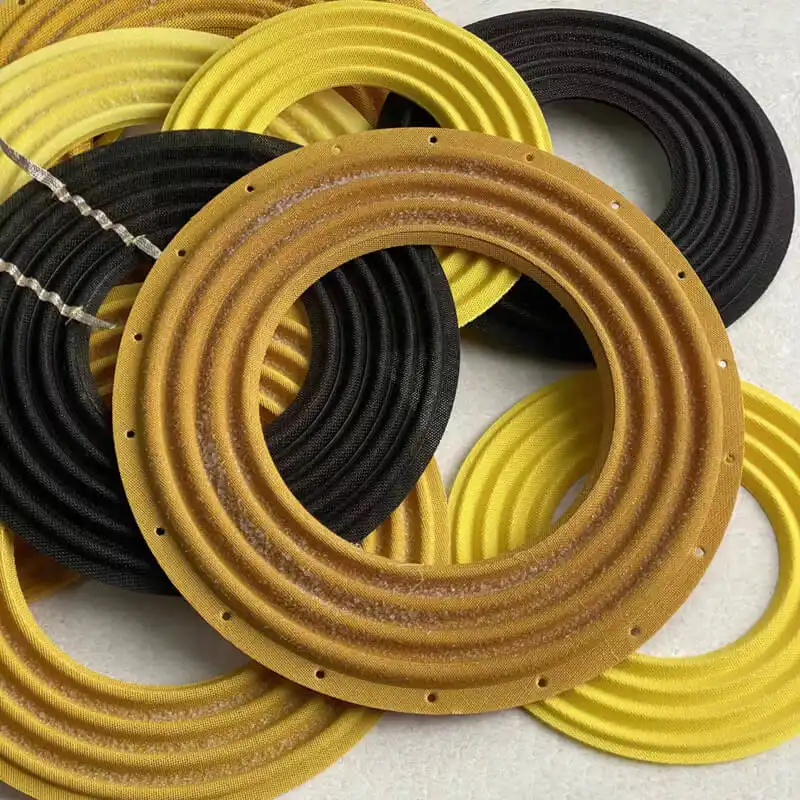
Custom Speaker Spider Sample Matching: From Old Damper or Drawing to Approved Production Part
Learn how buyers turn an old speaker spider, damper, or partial drawing into a production-ready part through measurement, material review, trial samples, approval, and batch control.
Custom Speaker Spider Sample Matching: From Old Damper or Drawing to Approved Production Part
When a loudspeaker design needs a replacement spider, a new OEM part, or a matched suspension component for an existing build, the starting point is often not a complete drawing. More often, buyers have an old damper, a worn sample, a photo, or a partial specification sheet. In those cases, custom speaker spider sample matching becomes the most practical route from concept to production.
A good sample matching process does more than copy shape. It aligns the part with the voice-coil group, centering requirement, compliance target, and production method so the final spider performs consistently in real assembly. For international buyers, the value is simple: fewer misunderstandings, faster RFQ preparation, and a clearer path from sample to approved batch.
What sample matching really means in speaker spider development
Sample matching is the process of converting an existing spider or damper into a manufacturable specification. The buyer may have:
- an original spider removed from a speaker
- a damaged or aged damper sample
- a drawing with missing dimensions
- a reference part from an older production run
- a requirement to match an existing acoustic or mechanical behavior
The goal is not just visual similarity. The part must fit the basket and voice-coil system, hold centering under movement, and deliver the expected compliance. In loudspeaker terms, a spider that looks right but sits too stiff, too soft, or slightly off-center can cause noise, rubbing, reduced excursion, or inconsistent assembly results.
That is why the matching process usually focuses on three areas:
- Geometry — does the part fit the assembly?
- Material and corrugation — does it flex the right way?
- Process consistency — can it be repeated in tooling and batch production?
The key specifications buyers should confirm first
Before any trial sample is made, the buyer should collect the most useful reference data possible. Even a worn sample can provide enough information when it is measured correctly.
Core dimensions
For speaker spiders and dampers, the most common checkpoints include:
- OD: outer diameter
- ID: inner diameter
- SOD: stitched outer diameter, when relevant
- FH: fold height or formed height, depending on part structure
- EH: edge height or effective height, where applicable
These values determine whether the spider will seat correctly in the frame and align with the voice coil former.
Matching to the voice-coil group
A spider cannot be developed in isolation. It has to match the full moving system, including:
- voice coil diameter
- former material
- cone or diaphragm attachment area
- basket depth and landing position
- required excursion and restoring force
If the spider is too stiff for the coil group, the moving system may feel constrained. If it is too loose, centering may suffer. That is why good sample matching always asks how the spider works inside the speaker, not just how it looks on the bench.
Material and corrugation
Material selection directly affects compliance and durability. Buyers should note any known material code, resin treatment, fabric type, or coating style. Corrugation count, wave depth, and wave spacing also matter because they influence suspension behavior.
A change in corrugation can alter:
- stiffness
- restoring force
- center stability
- fatigue resistance
- excursion behavior
If the original sample is aged, deformed, or heat-affected, the measured stiffness may not fully represent the intended design. In that case, the buyer and factory should discuss whether the target should match the old sample exactly or match the intended performance more closely.
How a factory turns a sample into a trial part
Once the reference part is received, the practical development flow usually follows a disciplined sequence.
1) Receive and inspect the original sample
The sample is checked for physical condition, visible damage, glue residue, deformation, and abnormal wear. If the sample is not in good shape, the factory may need more reference photos, an old drawing, or a second sample to avoid building the wrong geometry.
2) Measure the part and map the structure
The factory records the critical dimensions and reviews the structural layout. This includes the OD, ID, SOD, FH, EH, inner/outer landing areas, corrugation pattern, and any stitched or bonded features.
For spider matching, the smallest measurement error can create a fit problem later in assembly. For that reason, buyers should treat dimensional confirmation as part of RFQ preparation, not as a later correction step.
3) Review stiffness and centering behavior
A spider is expected to support the moving system and keep the voice coil centered through its working range. During sample matching, the team should discuss compliance targets, excursion needs, and whether the part is intended for woofer, subwoofer, or repair replacement use.
This is where the buyer’s application knowledge matters. The same size spider can behave differently depending on cone mass, coil group, and installation depth.
4) Select a workable material construction
If the original material is known, the factory can try to match it closely. If not, the closest workable material is selected by performance target. In many projects, the question is not only “what is it made of?” but “what response do we need from it?”
A good technical discussion should cover:
- fabric base
- resin or coating type
- thermal resistance expectations
- rigidity versus compliance balance
- repeatability in mass production
5) Make a trial sample
Trial samples show whether the proposed structure fits the real speaker system. This is where sample matching becomes tangible. Buyers can check:
- assembly fit
- centering performance
- glue area compatibility
- movement symmetry
- compliance under load
- whether the cone and coil move freely without rubbing
If the trial sample misses the target, the factory adjusts dimensions, corrugation, or material construction and issues another sample for review.
Why buyer approval matters before tooling and batch production
A good sample is not yet a production part. It becomes production-ready only after the buyer confirms that it matches the target part or performance requirement.
Approval should cover both fit and function. In practice, that means the buyer should confirm:
- the measured dimensions are acceptable
- the material direction and texture are acceptable
- the corrugation profile is acceptable
- the centering and compliance meet the application need
- the part can be assembled consistently in the intended line
Once approved, tooling and process settings can be locked for batch production. This is important because an unclear approval stage often leads to repeated revisions, wasted time, and inconsistent parts across later orders.
For OEM speaker projects, a clear approval record also helps when the same part must be reordered months later. The approved sample becomes the reference point for future production control.
What to include in an RFQ for custom speaker spider sample matching
A strong RFQ saves time and reduces the risk of mismatch. Buyers do not need a perfect drawing to start, but they should provide enough information for practical evaluation.
Useful RFQ items include:
- original sample photos from top and side views
- measured OD, ID, SOD, FH, and EH if available
- speaker model or application type
- voice-coil diameter and former material
- required stiffness or compliance preference
- quantity for trial and batch production
- target use: OEM build, replacement, or repair
- any special glue, stitching, or coating requirement
- expected delivery timeline
If the buyer only has a worn part, sending physical samples is often the fastest path to a reliable match. Photos help, but a sample gives the factory the best chance to verify the structure and recommend a realistic production method.
Common mistakes that slow down spider matching
Even a well-intended project can stall when the reference is incomplete. The most common issues are predictable.
Missing fit data
Without OD, ID, and landing detail, the sample may look close but still fail during assembly.
Treating a damaged sample as the true standard
If the part has age deformation, heat stress, or previous misuse, copying it exactly may preserve the problem.
Ignoring the voice-coil group
A spider that is correct for one coil group may not work for another, even if the external dimensions are similar.
Under-specifying compliance
If the stiffness target is not clear, the part may be built too rigid or too soft for the application.
Approving by appearance only
A spider can look right and still behave incorrectly. Approval should include assembly and movement checks.
Why sample matching is useful for OEM, repair, and replacement channels
Sample matching supports several buyer groups in different ways.
For OEM speaker teams, it helps turn an existing design reference into a repeatable production part with controlled dimensions and stable supply.
For repair replacement buyers, it offers a way to recreate discontinued or hard-to-source suspension parts without needing a full legacy drawing.
For woofer and subwoofer builders, it provides a practical route to matching compliance and centering behavior in a specific moving system.
For component sourcing teams, it creates a cleaner handoff between sample review, supplier quotation, tooling confirmation, and batch ordering.
In all these cases, the real advantage is control. The buyer can move from an old spider or damper sample to an approved production part with fewer assumptions and a clearer technical record.
A practical way to think about the process
The best custom speaker spider sample matching projects move through the same logic:
- identify the reference part
- measure the critical dimensions
- define the voice-coil and assembly requirement
- confirm material and corrugation direction
- test a trial sample
- approve the match
- lock tooling and production settings
- release batch orders with the agreed specification
That sequence helps buyers avoid the common gap between a physical sample and a repeatable production part. It also makes procurement easier because the specification becomes clearer at each step.
When the reference is limited, the right partner is not the one that promises an instant copy. It is the one that can measure carefully, ask the right questions, make a workable trial sample, and keep the result consistent in production.
FAQ
Can a speaker spider be matched from an old sample without a drawing?
Yes. An original sample is often enough to start. The factory can measure key dimensions, review corrugation and material structure, and make a trial part for buyer approval.
Which dimensions matter most for spider sample matching?
OD, ID, SOD, FH, and EH are usually the first checkpoints, along with the landing areas and the match to the voice-coil group.
What if the old sample is damaged or deformed?
If the sample is not in good condition, the buyer should provide photos, any remaining drawing data, and ideally a second reference sample to reduce the risk of copying a distorted part.
Why is corrugation important in a custom speaker spider?
Corrugation affects stiffness, compliance, centering, and fatigue behavior. A small change in wave shape or spacing can change how the speaker suspension performs.
What should be confirmed before batch production starts?
The buyer should confirm dimensions, material construction, centering performance, compliance, and assembly fit so the approved trial sample becomes the locked production reference.
FAQ
Can a speaker spider be matched from an old sample without a drawing?
Yes. An original sample is often enough to start. The factory can measure key dimensions, review corrugation and material structure, and make a trial part for buyer approval.
Which dimensions matter most for spider sample matching?
OD, ID, SOD, FH, and EH are usually the first checkpoints, along with the landing areas and the match to the voice-coil group.
What if the old sample is damaged or deformed?
If the sample is not in good condition, the buyer should provide photos, any remaining drawing data, and ideally a second reference sample to reduce the risk of copying a distorted part.
Why is corrugation important in a custom speaker spider?
Corrugation affects stiffness, compliance, centering, and fatigue behavior. A small change in wave shape or spacing can change how the speaker suspension performs.
What should be confirmed before batch production starts?
The buyer should confirm dimensions, material construction, centering performance, compliance, and assembly fit so the approved trial sample becomes the locked production reference.
Factory RFQ Next Step
Move from research to a specification shortlist with product examples that can be sent for factory quotation.